Decorative pipe flanges are not made for holding back high-pressure steam or corrosive chemicals. Instead, they are the structural hardware of industrial-chic design, used to build shelving, furniture, and lighting with a rugged, functional aesthetic. Understanding the key differences between these and industrial flanges is the first step to using them correctly.
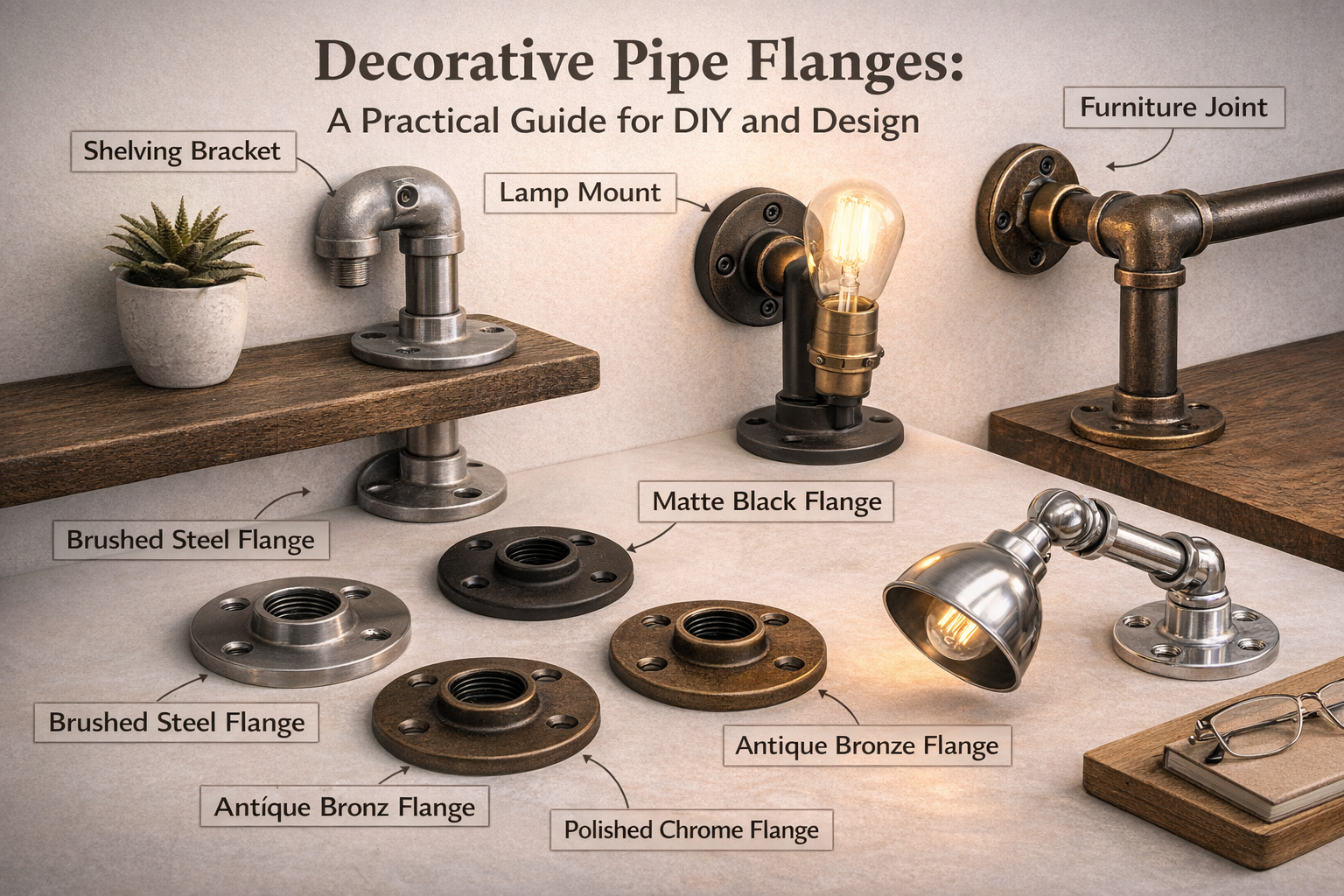
Here is a quick comparison of where and how these two flange types are used:
| Feature | Decorative / DIY Pipe Flanges | Industrial Pipe Flanges |
| Primary Purpose | Aesthetic design and structural support in furniture and décor. | Creating secure, leak-proof seals in pressurized piping systems. |
| Typical Standards | Few formal standards; size based on pipe outer diameter (e.g., 1/2″, 3/4″). | Governed by strict standards like ASME B16.5, with defined pressure classes (150, 300, etc.). |
| Common Materials | Black or galvanized steel, cast iron, brass for finish. | Carbon steel, stainless steel, specialty alloys for strength and corrosion resistance. |
| Key Dimensions | Outer diameter of the flange (e.g., 3 inches), pipe thread size, bolt hole pattern. | Outside diameter, bolt circle, thickness, bore size—all standardized. |
| Connection Method | Screws onto threaded pipe or is bolted to a wall/floor. | Welded (e.g., weld neck, slip-on) or bolted with a gasket for a pressure seal. |
| Industry Applications | Interior design, furniture making, residential DIY projects. | Oil & gas, chemical processing, power generation, waterworks. |
Materials and Finishes for the Right Look
Choosing the right material affects both the look and the longevity of your project.
- Black Steel Pipe: This is the classic for industrial style. It has a dark, matte finish that creates a bold contrast. It’s strong and low-maintenance for indoor use.
- Galvanized Steel: These fittings have a silvery, zinc-coated finish. The galvanization process makes them resistant to rust, which is good for bathroom projects like towel bars or for outdoor furniture.
- Cast Iron: Offers a vintage, heavy-duty look and is very durable. It’s often used for flanges that need to provide sturdy feet for tables or floor lamps.
- Brass: Sometimes used for a more decorative, polished look that can suit steampunk or vintage themes.
Popular Applications and Project Ideas
Decorative flanges are incredibly versatile. Here are some of the most common ways they are used:
- Shelving & Furniture: This is the most popular use. Flanges screwed to the wall act as brackets for wooden shelves. Combined with pipes and other fittings, they form the legs and frames for tables, desks, and consoles.
- Clothing Racks: Creating a freestanding or wall-mounted garment rack is a simple and popular DIY project using pipes, flanges, and fittings.
- Lighting Fixtures: Pipes and flanges can be assembled to create unique pendant lights, wall sconces, or floor lamps with an industrial character.
- Decorative Accents: Smaller “mini flanges” can be used for creative accents, like connecting pipes for a room divider, a towel bar, or even a unique piece of wall art.
Installation and Maintenance Tips
A good installation ensures your project is safe and looks professional.
- Plan and Measure: Always sketch your design and measure your space carefully. For shelves, locate the wall studs for a secure anchor point.
- Dry-Fit First: Assemble all pipes and fittings without screws or glue first. This lets you check the alignment and make sure everything fits.
- Secure Mounting: When attaching a flange to a wall or floor, use the appropriate screws. For heavy shelves, always anchor into wall studs or use heavy-duty drywall anchors.
- Basic Maintenance: Dust regularly. For black or cast iron, you can apply a thin coat of clear lacquer or wax to prevent surface rust if desired. Galvanized finishes typically don’t need this.
Frequently Asked Questions
Q: Can I use plumbing pipes from a hardware store for decorative projects?
A: Yes, standard black iron or galvanized steel pipes (often called “schedule 40”) are commonly used. Ensure the threads match your fittings.
Q: How much weight can a pipe shelf hold?
A: It depends on the pipe size, wall mounting, and flange quality. A well-secured shelf using 3/4-inch pipes can typically hold significant weight. Always ensure the flange is firmly anchored to a wall stud for safety.
Q: What tools do I need?
A: Basic tools include a pipe wrench or strap wrench to tighten fittings, a level, a tape measure, and a drill for mounting.
Q: Do I need to seal or paint the pipes?
A: It’s optional. Many prefer the raw industrial look. If you want to prevent rust on black steel or change the color, use a spray paint designed for metal. Clean off any factory grease first.
Conclusion
Decorative pipe flanges are a fantastic way to add sturdy, industrial character to your home. Success comes from choosing the right style and material for your look, planning your design carefully, and ensuring everything is securely assembled.
While Texas Flange specializes in high-performance industrial flanges, the principles of quality and precision machining apply to all metalwork. For those undertaking a decorative project who need guidance on material properties or sourcing durable metal components, our team can provide expert advice. Reach out to us for support on your next build: http://texasflange.com/lp12/